
Introduction.
Hi there! If you read my recent diary entry called ‘speaking with spearmint’, you might have a sneaking suspicion that this essay follows on from that. Well, you’re right! Today I am going to be discussing mint and it’s various species and cultivars from the perspective of folk herbalism, folklore, and folk witchcraft.
I am going to to share with you a mint based spell for prosperity, an example of a soothing mint tea for gastric dis-ease and discomfort, a few other mint-based remedies, the mints place within floriography, as well as some of it’s documented folk plant lore.
So, without much further ado, let’s head on into the garden to meet with the mint!
NOTE: Diary Of A Folk Witch and the author of this blog take no responsibility for any adverse reactions to remedies shared within this blog. They are shared for the purposes of example only. For legal reasons, this platform advocates readers always do their own research before trying any holistic therapy, and where appropriate, seeking tailored advice from a Medical Herbalist or Doctor.
Subscriber Content
Add content here that will only be visible to your subscribers.
Plant Profile.
Mint can refer to any one of 25 different species in the Mentha genus, in the Lamiaceaea family, or, one of the hundreds of hybrids and cultivars found around the world. Mint species are found in many corners of the world; with species found in Eurasia, the Americas, Australia and southern African lands.
The species come with a potent range of scents, although most people in the West will recognise the smell of Spearmint (Mantha spicata) or Peppermint (Mentha x piperita), as the archetypal mint. There are mints that smell of banana, grapefruit, chocolate, strawberry – really the options are endless from these promiscuous and productive species.
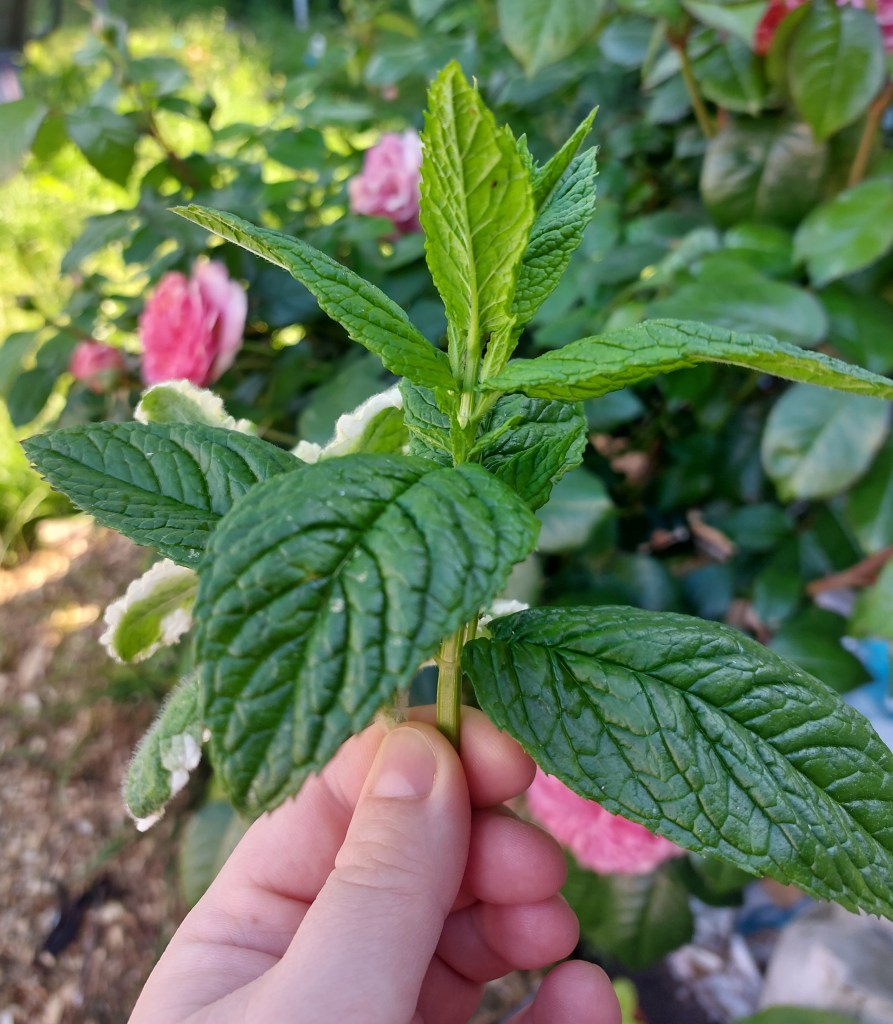
Like most members of the Lamiaceae, mints have squared stems, often with a pithy, or, hollow centre. The leaves are arranged opposite, and the plants are strongly aromatic with the volatile oils being held in resinous spots on the surface of the leaves and stem.
Generally speaking, mints produce small four petalled flowers in clusters or whorls around the stem, with some presenting as tufts or spikes at the stem top also. The flower is most often white, purple or pink.
The plants can vary in height by species and by their growing environs. Some, such as Corsican mint, grow little more than 10cm tall, while others, such as spearmint can reach heights of over a metre.
Plants can quickly take over as they are able to reproduce both sexually, via seed, and vegetatively, via cuttings, rooting where stems touch the ground and by stolons – underground stems.
Mint Within Folk Magic And Folklore.
When it comes to the folk magic applications of the mint within workings and folk ways, they are usually focussed on either it’s culinary and phytotherapeutic (herbalism) qualities, or it’s use within money magic and cleansings.
From a herbalism viewpoint, the mint is an ideal digestive aid (though the mint Pennyroyal should be avoided due to it’s toxicity!) and helps clear the body of excess wind, indigestion and flatulence. Mint is also mildly antispasmodic, and can improve the symptoms of stomach gripes. As well helping to ease and cleanse the digestive tract, mint has been used within both folk ways and commercial remedies to cleanse the palate and freshens ones breathe, toothpaste is nearly always mint flavoured for this reason. There are some references to the Romans using mint as an after dinner aid, and mint has been found in some ancient Egyptian pyramids.
A further testament to mint’s cleansing qualities is that it is mildly antifungal, antiseptic and antiviral.
Due to this plant’s high level of aromatic oils, it is not uncommon to find peppermint aromatherapy essential oils used in home cleansing products such as cleaning sprays, or added (in moderation) to some home incense blends. Though it should be noted that mint based essential oils are not suitable for use around young infants.
The practical uses of mint often cross over into the world of sympathetic magic for the purposes of energetic cleansing and prosperity magic. The common English term of being ‘minted’ means to be wealthy, and etymologically speaking comes from three streams, although how much ‘mint’ the herb is conflated with ‘mint’ the making of money is debatable. The first being from the middle English word ‘mynet’ (meaning coin or a place where money is manufactured), the second being from the Greek nymph Minthe who was cursed into taking the form of the plant we now call mint, and the third being that mint is notorious for growing in abundance! It will often spread along a garden patch and grow three or four times the size new gardeners expect it too.
Due to its abundance in growth, some folklore suggests that mint should never be bought, and that it is unlucky to do so (presumably because you are swapping wealth for wealth? which is a somewhat redundant thing to do).
Instead, mint should always be gifted, borrowed, or stolen.
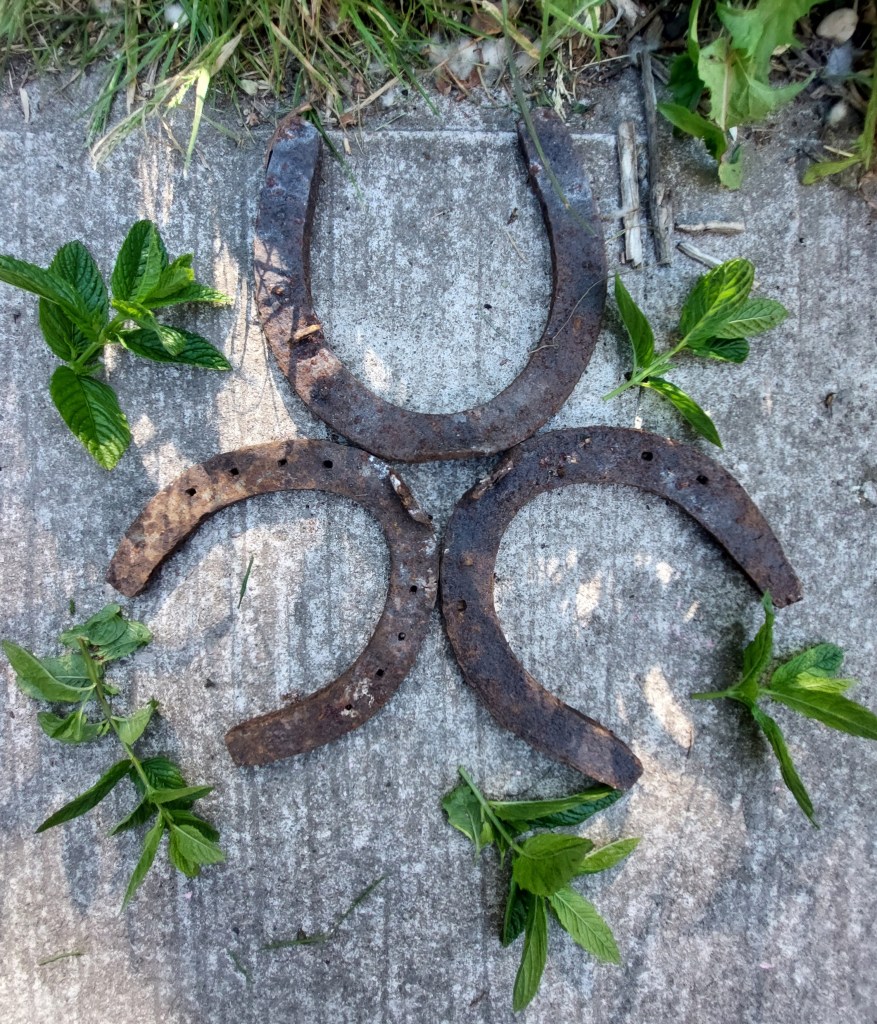
One folk witch working I know of is to steal the mint (ideally by the root) from an enemies garden, and plant it in your own garden, as a means of draining another persons wealth and directing it towards you. There is potential counter curse for this, and that is to steal some of the mint back and place them around three horse shoes that are placed in a position that represents the holy trinity or the triquetra (depending on your spiritual viewpoint). The mint must be left around the horse shoe to dry out naturally. Once it has dried, it can be crumbled and scattered over the attacker’s doorstep or place of work. Thus neutralising their initial theft of your mint.
Certain house cleansing rituals will specifically list mint as a herbal ingredient in the form of fresh or dried herbs, potted plants, saining/smudge bundles, or in the form of essential oils or room cleansing sprays.
In Greek mythology, it is said that the river nymph Minthe was becoming Hades new infatuation. Not too happy with this, Persephone, wife of Hades, had Minthe turned into a plant that people would forever step upon. Hades was unable to undo Persephone’s curse, but he did ensure that Minthe would forever have a beautiful fragrance so that he could always smell her.
A Mint Working For Prosperity.
- Take a sprig of the healthiest garden mint you can find, and hang it to air dry on a piece of green thread or cord.
- When air drying the mint, it is important to hang it directly over the place where you would usually store your wallet, purse, handbag, backpack etc while not in use (for example, where you lay or hang your bag overnight).
- As you hang the mint, say aloud:
“sprig of mint, small and green, dry out misfortune and replace it with
wealth. My purse is bare, as you can see there. So dry out misfortune and
bring me some luck”.
Final step: Once the mint has fully dried, crumble it into a bowl. With the crumbled mint, place some of it into your purse or wallet, and some of it into your handbag, backpack, and/or coat pockets. You can also add to this workings potency by adding the crumbled mint into your shoes. This will work towards erasing misfortune and drawing good fortune towards you and your finances.

Growing Mint.
Mint, in it’s most common forms, are readily available as seed plants in many supermarkets and garden centres. More unusual forms can be ordered online as plants, or bought as seeds.
The seeds generally do germinate readily when sown on the surface of a moisture retentive, free draining soil/compost.
Plants can be propagated by taking simple cuttings (a few inches long and bunged in water, or damp compost will usually do the trick).
Most mints are tolerant of a good range of soils and temperatures, but produce more volatile oils, and ergo scent, when grown ‘hard’. That is to say, grown in a not too rich soil that is left a little on the dry side.
Given half a chance many types of mint will take over as much ground as they can. As such it’s often recommended to plant mint in large pots, or bottomless pots (at least 30cm deep) as a method of curtailing their somewhat invasive nature.
Mint can also be grown as shorter lived plants in pots indoors. Find a sunny windowsill and grow it as a crop to use in cooking without needing to stray as far as the garden to harvest.
Mint Recipes And Remedies.
Spearmint & Chamomile tea.
One of my personal favourite herbal tea blends is a soothing blend of chamomile, spearmint and lemon balm. It aids in soothing stress and irritable tummies (often a side effect from chronic stress). It’s light, refreshing, tastes beautiful, and has soothing, calmative, and antispasmodic effects.
To make this tea, I mix together in equal parts: Spearmint (Mentha spicata, Chamomile (Matricaria recutita) and Lemon balm (Melissa officinalis).
I drink this tea up to three times a day and sweeten it with either honey or maple syrup.
Important Note! Where all of the herbs in this tea are generally mild and safe herbs for consumption, some may have contraindications with other medications taken. As well as this, it is always possible to experience an allergic reaction to a herb you have never tried before. Please be mindful of this before trying any herbal supplements, and if you are ever unsure, please consult with a medical herbalist or general practitioner (G.P).
Peppermint and Grapefruit cleaning spray.
If like me, you prefer to make your home own cleaning products, then you may like this easy solution for bathroom cleaning!
You will need:
Peppermint essential.
Grapefruit essential oil.
Organic apple cider vinegar (480ml).
Empty 500ml spray bottle.
Method:
Into a clean empty spray bottle, pour 8-10 drops of peppermint essential oil, followed by 8-10 drops of grapefruit essential oil.
Once you have done this, add 480ml of Organic apple cider vinegar, cap the bottle and shake vigorously. 480ml of vinegar will allow for you to have about a 20ml clearance of the bottles volume capacity, meaning you should, in theory, avoid any overflow.
The combined essential oils in this blend contain both antibacterial and antifungal properties, making it a wonderful resource for cleaning bathroom gunk and imparting a fresh and natural smell.
Shake well before each use to ensure the essential oils do not clog up the nozzle of the bottle.
Important Note!: Peppermint can occasionally trigger those with asthma, as can some citrus based essential oils. Please bear this in mind when using this blend, and do not use around children under the age of two.
Energy cleansing and grounding mist:
This energy cleansing and grounding mist is an ideal aid to gently and lightly spritz about the self when either coming home from a long and busy day, and needing to re-ground, or using upon the self before heading out for what you know may well be a super busy, stressful, or high-pressure event such as public speaking.
You will need:
1 30ml spray bottle.
3 drops of peppermint essential oil
2 drops spearmint essential oil
2 drops of pine essential oil
2 drops of lavender essential oils
Sacred well or holy water, or filtered water if the former is not available.
- Upon a new moon, charge your collected or filtered water in your own unique and chosen way.
- Carefully drip each of the essential oils into the spray bottle and then top the bottle up with the charged water.
- Attach the spray cap and shake well.
- Leave the spray bottle upon your altar and shake once a day until the following full moon. Once it is the day after the full moon, the energy cleansing and grounding mist is ready to use as and when needed.
Note: This spray will keep for around three months, perhaps six months if you keep it in the fridge. Remember to shake well before each use, and avoid use around young children, or if you are allergic or sensitive to any of the ingredients.
Mint Within Divination.
Within Victorian floriography and some streams of flower psychometry, mint (along with sage) is associated with virtue. This likely stems from the fact that both plants have so many medicinal and culinary virtues that can be harnessed by healers and chefs alike. During the Victorian era, many plants were assigned secret coded meanings so that bouquets could be gifted with additional meanings and messages. Gifting or receiving mint within a flower arrangement was a signal that although a young lady may be in love, she was in fact virtuous and even virginal – and therefore not open to promiscuity.
Within some streams of folk witchcraft, the flower meanings and divination for mint varies a little. It does still represent virtue, but also the ability to expand ones virtues or gifts and use them much more then they currently are. In this case, mint advises a seeker to not shy away from broadening their horizons and being open to growth and self development.
Historically, mint has also been utilised within the divinatory art of botomancy. In this case, the mint would be burnt and it’s power of fragrnace, smoke, ash markings and so on can be evaluated for the purposes of divining.

Conclusion.
I hope that you enjoyed this week’s instalment of the tree and plant lore series and our exploration of mint! Next month will be the folk witchcraft and grimoire series! Not only this, I hope that June will see me launch the podcast for Diary Of A Folk Witch, I’m very excited and hope you are too. If you’re not already a member of our private Facebook group, please drop an email to diaryofafolkwitch@gmail.com and we can get you sorted in no time!
From the time, mists, and distance between us, blessings from me to you.
Zanna
List of references:
1) ‘Forget-me-not, a floral treasury’, by Pamela Todd and illustrated by Ian Penney.
2) ‘Witches garden (plants, folklore, magic and traditional medicine’, by Sandra Lawrence.
3) ‘A dictionary of plant lore’, by Roy Vickery.
4) ‘Hedgerow Medicine’, By Julie Bruton-Seal and Matthew Seal.
5) ‘Encyclopaedia of herbal medicine’ by Andrew Chevallier.
6) ‘Edible wild plants and herbs’ by Pamela Michael.
7) ‘Cunningham’s encyclopaedia of magical herbs’, By Scott Cunningham.
8) ‘The ultimate guide to aromatherapy’, by Jade Shutes and Amy Galper.
9) ‘The complete guide to essential oils’, by Gill Farrer-Halls.
And with thanks to the many Wayside witches, community elders, and family members I have had the honour of learning from over the years.
 Diary of a Folk Witch