Hello everyone, and welcome to the first instalment of the Kitchen Witchcraft Series. Each month, I share with you one free recipe that you can make yourself, at home, for Sabbats, festivals, healings, special occasions, ritual, and general folk witch living!
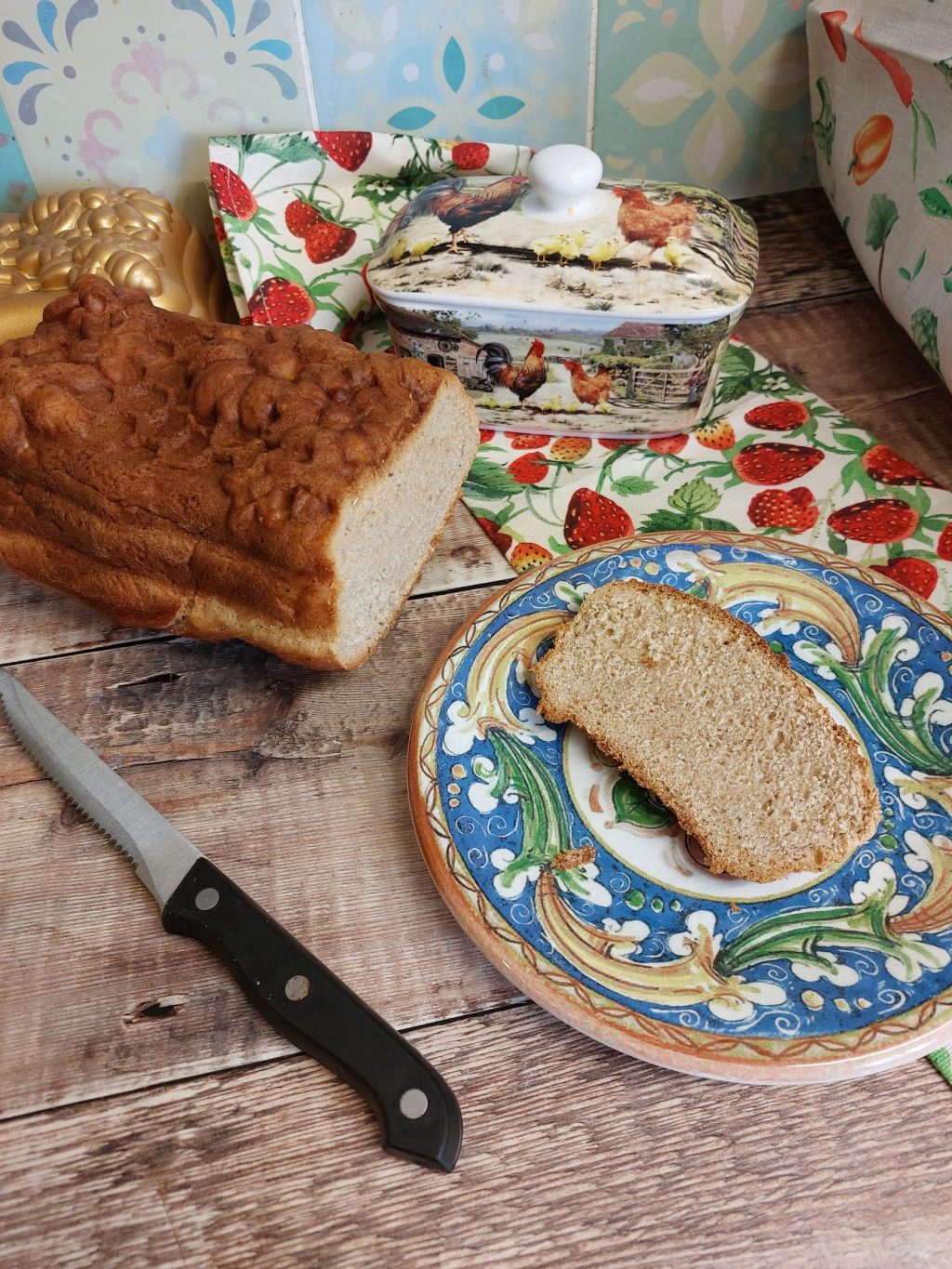
We are fast approaching Lúnasa; the Celtic fire festival and first harvest of the year. As this is our first harvest festival, I thought that this would be the perfect opportunity to share with you my yummy Lúnasa sourdough loaf!
So, grab your sourdough starters and pre-heat that oven, and let’s get baking!
Lúnasa.
Lúnasa (also known as Lammas, Lughnasadh, and Lughnasa) is one of the four Celtic fire festivals that feature in what is now widely accepted as the Neo-Pagan Wheel Of The Year. It is important to note that the Wheel Of The Year, as we currently know it, is an entirely modern creation, and not ancient.
Although the individual European and Celtic festivals that appear in the modern Wheel Of The Year are very old, it was Gerald Gardner and Ross Nichols who pieced them all together in the mid twentieth century, to create the cyclical wheel that most Pagans now follow.
On that wheel, Lúnasa is the seventh festival, with Samhain being the first, and the autumn equinox being the last before the wheel has turned it’s full circle, and reached Samhain again.
Despite many people seeing August as being the height of summer, in reality – or at least, from a agricultural viewpoint, we are in fact reaching the end of the agricultural year. Historically, our ancestors would now begin the task of harvesting the first staple crops and carefully storing and preserving them for the winter months. Whereas today, we have the luxury of supermarkets and next day delivery on the most exotic of items, our ancestors survival counted on saving the food they had sown, grown, reared or hunted and then harvested.
Though it wasn’t all toiling away for later preservation, Lúnasa was also a time of great celebration, with feasts, festivals, and parties, and more! Lúnasa was also very much a time of enjoying the abundance of fresh food.
Throughout the centuries many in Ireland, at Lúnasa, would find themselves running out of their staple carbohydrate foods – such as grain crops and legumes like peas and field beans.
Those staple crops are the ones we still rely on today, and for many communities these were the difference between survival and starvation. Coastal populations were perhaps less reliant with access to fish and shellfish. While the spring brought milk, butter and the promise of cheese as the summer progressed, as well as an array of greens, the back bone of many cultural dishes were those crops grown in bulk. After all, bread might be made more enjoyable by butter, and pies might be sweeter thanks to summer berries, but much of the calorific content needed to keep one alive comes from the flour in the dough and pastry.
Grain harvest also gave bedding for live stock and thatch for roofing repairs and basket making, in the form of straw (and animal fodder as hay). A lot hinged on these harvests, especially in years following previously poor, or modest, harvests. In these situations people would be carefully eking out the last of their food and often going hungry.
With Lúnasa came celebration and thanks. Historically, this thanks would have been primarily to the god Lugh, then later this would have morphed into the more Christianised Lammas (loaf festival).
Sourdough is very in vogue now. In fact, I cannot think of one homesteader, crofter, chef, or stay-at-home mum content creator who hasn’t blogged or vlogged on the wonders of sourdough, fermented foods, and it’s benefits to the body’s microbiome! However, sourdough is far from new, it is EXACTLY the kind of folk skill our ancestors would have utilised in order to save and make food.
As an Anglo-Irish Witch, I can safely say that my Irish Catholic foremothers were certainly making sourdough loaves back on the farm in Tyrone. Although I never got the chance to make sourdough with my grandmother, I do remember her referencing it when she taught me how to make scones and soda bread.
The more Christian and anglicised Lammas (or Loaf Mass) is related to Lúnasa. Also celebrated on August 1st, loaves of bread would be brought to church (often on the Sunday before August 1st, if not on the day of Loaf mass) in order be blessed, and for both parishioners and the church to give thanks for a good harvest.
Be it Christian or Pagan, both parties had no choice but to observe agricultural cycles and feel the relief of abundance that new and bountiful crops would bring.
Whether one was giving thanks to the Judaic Christian God, or to Lugh, a good harvest was, quite literally, the difference between life and death for all communities. Even today, despite the luxury of supermarkets, we still occasionally feel the tension of poor crops, or even hens on low lay. Sometimes caused by poor weather, living conditions, or from being affected by bird flu. All of which can interrupt our food supply chain. It may feel that we are far away from our agricultural roots, and somewhat divorced from nature, but in reality, we are only blocked by the intermediary of the supermarket, or more accurately, capitalism.

Fermentation Magic.
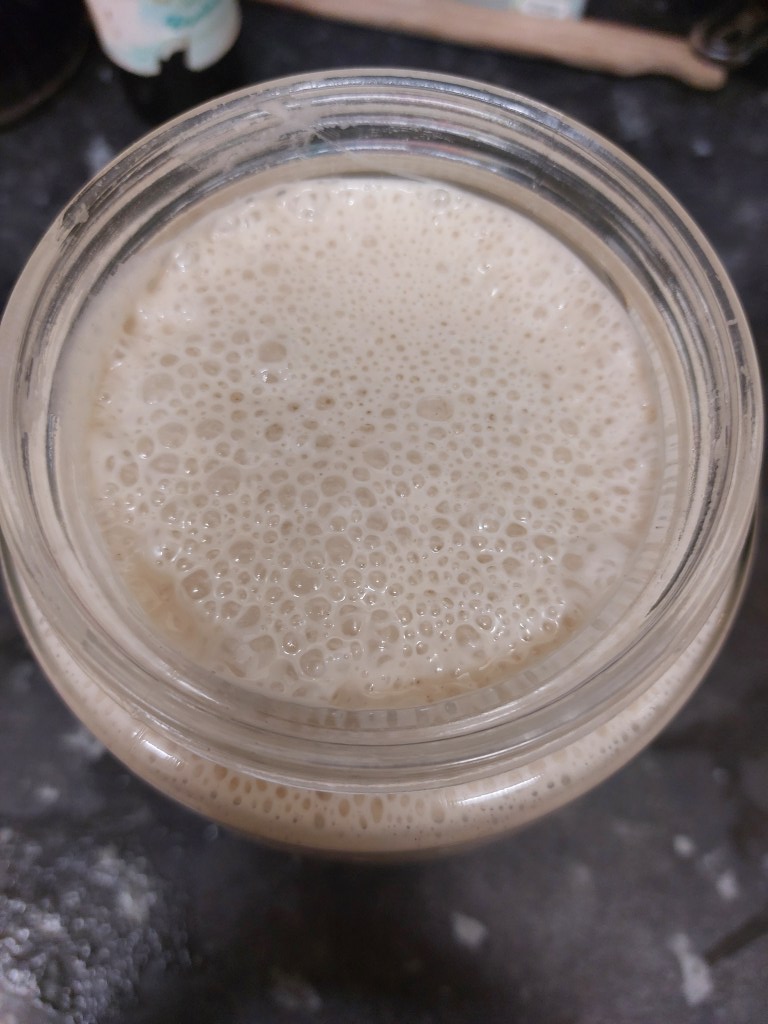
Fermentation is magic! In the case of sourdough, you simply take flour and water and keep adding them together, once a day for roughly seven to ten days, until you get a frothy and bubbly living organism that feeds your microbiome!
For many folk witches who, like myself, practice some form of homesteading and self sufficiency, we are well aware of the potent mystery and magic of fermentation. Some of us even name our soughdough starters! And why not? It is effectively a living organism, or at least a colony thereof, and the animistic folk witch sees the sacredness in all living things, no matter how varying it’s sentience might be. For the well practiced Witch and folklorist, we know only too well the power of a name, or of giving a name to something. It can quite literally bring something to life or set the tone for it’s entire existence. The study and practice of Numerology demonstrates this perfectly, where the name equates to a numerical value and, ergo, a set of inferred traits.
It is because of this that many of us choose to name and even talk to our starters in terms of affection. I kid you not, many of us fermenters find that a named and spoken to starter thrives much more than the one who is just plonked on a shelf or counter, and then the fridge between uses!
As well as this living organism seemingly responding to verbal communication and naming, it has the ability to help heal the human body. As science progresses, we are understanding more and more that our body is largely one big walking microbiome, and perhaps only as little as 10% of our being is what can be defined as ‘human’ in DNA terms. By feeding our gut microbiome, we can improve immunity, repopulate gut flora, and potentially even reduce food and environmental allergies.
Fermented food is a still practiced magical alchemy, known and beloved by many kitchen witches. If you’re not yet familiar with it’s practice, now is that chance to go and learn!
Recipe.
Ingredients needed:
150g of Sourdough Starter.
425g Strong White Flour.
5g of Good Quality Sea Salt.
225ml Of Luke Warm Water.
50ml of Room Temperature Milk (Or Plant Milk Of Your Preference).
40g Salted Butter.
1tsp Mixed Herbs
1tsp Onion Powder.
Mixed seeds (optional)
A Baking Tin Or Bred Pan Of Your Choice.
Note: For this recipe, I am using the Nordic Wear Honey Loaf Pan. Really, it is a cake pan, but I find it does make a beautiful harvest style loaf!
In regards to any magic that you may want to add in to the working, such as prayers, affirmations, chants, or intentions, please add these intuitively. As and when you want to.
Step 1: Please start by making sure that your starter is both active and alive! A sleepy or off starter is not a baker’s friend. Once you have taken your starter out of the fridge, you will want to feed it, and then leave it out of the fridge, on a counter, for around 8-16 hours (depending on your climate and how warm your kitchen is).
Step 2: With carefully weighed ingredients, add your flour, salt, milk, and starter to a large mixing bowl and then mix together so that it is well combined. Once this is done, allow the dough to rest for about 45 minutes.
Step 3: Now, add your butter to the dough and knead (by hand or in an electric mixer) until you have a relatively non-sticky, stretchy and even dough. You will know your dough is ready if you can take a piece and gently stretch it out so that you can almost see through it without it breaking. Almost like a little window.
Step 4: Cover your bowl with a damp cloth and leave your dough in a warm (but not hot) environment for between 3-5 hours to prove. After this time, your dough should have roughly doubled in size.
Step 5: Remove the dough from the bowl – using a bread scraper if you need to, and place it onto a clean and lightly floured countertop or table surface and leave it to rest for about 20 minutes. While it is resting, you can grease your chosen baking tray/bread pan.
Step 6: Once you have allowed your dough to rest, gently shape it and then place it in your tin/tray, and then cover with a cloth and leave for another hour or two.
Step 7: Pre-heat your oven to gas mark 7/220°C. When your loaf has risen, place it in to the oven and bake for around 35 minutes.
Step 8: Once baked, remove the bread from the tin or tray, onto a clean board. Your bread should come out of the tin easily and sound hollow if you tap on it. Leave to cool and then serve!
You can eat it warm with butter, cream cheese, or a vegan spread.
Dip into soup, make a beautifully garnished sandwich, or more!
I hope that you enjoyed this month’s offering, and I also hope that you have a wonderful Lúnasa! Whatever it is you are harvesting this season, be it crops on a homestead or in a garden, a project, or anything else – may they be bountiful and nourishing.
Through the time, mists, and distance between us, blessings from me to you.
If you enjoyed this weeks blog, why not check out the podcast or consider signing up for the premium content subscription service? Where for £4pcm, you can have access to two exclusive blogs a month.
 Diary of a Folk Witch