
When it comes to house lore and the subsequent lore of household spirits, it can be a very mixed bag of folklore within the U.K and Ireland. This is largely owing to the fact that most folklore was shared orally and written down (where possible) during a time in history where these relatively small islands were still restricted by not having the convenience of public transport, cars, social media, the internet, and of course, the television. Both Britain and Ireland being countries that were hugely agriculturally influenced communities were often fairly isolated when it came to social interactions further away than the next village of town. This often meant that the folklore and witchlore of one region could have vast differences to that of the next county or region. In fact, it could be argued that the only reason why lore from far and near is becoming so blended and blurred over the last sixty or so years is because we are, in some ways, becoming more ‘connected’, and yet in other ways, are so disconnected. The advent of the internet for example, and its subsequent chatrooms and social media platforms, and the globalisation caused by the use of such resources, have caused many pieces or folklore to be transformed into local ‘urban legend’, and in some cases, such as ‘Bloody Mary’, worldwide mythos. This evolution of what often used to be very localised pieces of lore has caused a lot of changes and inconsistencies within the current beliefs we now share with each other and believe in as individuals.
For this blog, what I have tried to do is gather together a blend of pieces of lingering, and ergo established, beliefs around the invitation of household spirits to take up residence, and that of pieces of lore and practice that over the years, I have found to be effective in working with such spirits.
It is entirely possible that, as you read this blog, you may well see pieces of lore and practice that differs from lore you may be perhaps familiar with. If this is the case, you can either go with the lore you are already familiar with, or also add in some of what is held within this article too. Folk and witch lore is subject to evolution as much as we as human beings, and all aspects of our cultures, are, so do not be disheartened if some pieces of information differ from ones you already know or have collected over the years.
Faerie Or Spirit?
Technically speaking, there are many forms of household spirts. These range from fairies, spirits of the local land that was built on to make way for the homes and buildings we now occupy, ghosts, ancestors and even invented spirits such as tulpas and servitors. However, for the sake of this blog, I shall be referring almost completely to British and Celtic Faerie lore only. This is partly due to the fact that both Britain and Ireland hold such a fantastic plethora of faerie lore, and also to keep the blog much simpler, as spirits such as servitors and tulpas are deserving of a blog of their very own!
Keep A Tidy Home:
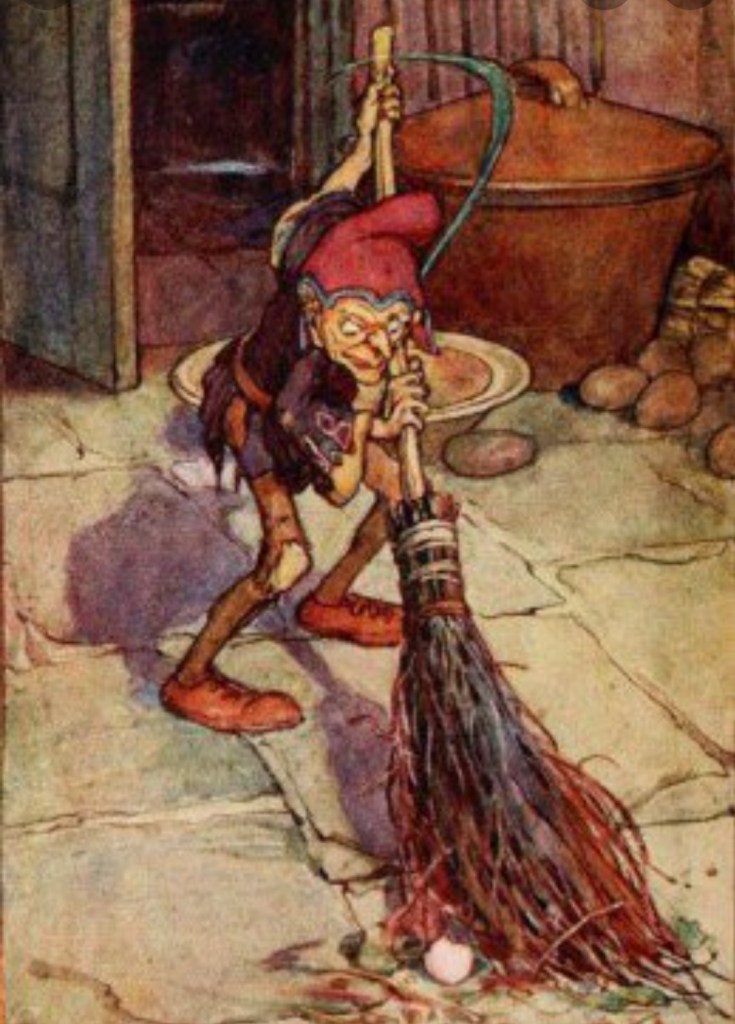
This seems to be a fairly well-established piece of lore that occurs across the board when it comes to keeping a home fit for faery help. This may stem from the belief that untidy homes with lazy occupants, especially here in the North West of England, are said to attract negative and mischievous spirits such as Boggarts. Once in residence, a Boggarts behaviour will range from anything to acting in a poltergeist like manner (making bumps and bangs in the night, knocking noises and the moving or throwing of items) to spoiling food, ruining crops or garden plants, unlocking doors and windows to invite burglars in, or even driving residents out of the home completely.
However, a home that has occupants who take pride in keeping a tidy and efficient space is said to attract helpful spirit aid, as they are seen more deserving of assistance, presumably for all their hard work and dedication.
Libations:
Another fairly consistent piece of folklore regarding the keeping of good household spirits is to regularly offer libations as gifts to the fae, especially in the form of bread, milk or honey. In Irish folklore, it is said that if you want to invite a good member of the Sidhe into the home or farmstead, you must leave milk and honey on the doorstep of the back door. Never the front door as this was to invite the faerie to be on an equal footing with the head of the household. Instead, one would send an invitation, while still demonstrating authority by leaving offerings on the back doorstep. When it was believed a member of the good folk had taken up residence in the house (such as chores being done within the home, with seemingly no explanation of anyone else doing the work), crops increasing, or signs of animals being groomed (such as horses mains being braided) then the faerie would be invited to stay, by way of a openly spoken vow that had a specific clause in, such as “Being of the Sidhe, come and stay as long as we hold you welcome, then go in peace when you or we have need of your welcome presence”. Such clauses were seen as vitally important to the Irish people who worked favourably with the Sidhe as it was also known that the Small Folk, despite being courteously also referred to as the ‘Good Folk’ were in reality neither good nor bad and could become a malevolent pest if given cause to do so. Having a clause in contract alongside inviting them in via the backdoor ensured that the occupants always had the authority to move the spirit on if needed.
In both Irish and some English folklore, it was believed that once a household spirit or faerie had taken up residence, they should be offered their libations once weekly (or monthly in some customs) at a set place in the home. such as by the back door, under the stairs, on a shelf, by the hearth or near a ‘spirit house’.
Spirit Houses.
This is likely to be a more modern Neo-Pagan concept that has been influenced from cultures outside of the UK and Ireland and used a way of honouring spirits of the home. But, some customs speak of creating a small residence for the spirit within the main home, a place where they can reside and have both privacy and rest. However, it is important that this is never portrayed as a ‘gift’ to the spirit as it will either insult the spirit and prompt them to leave or make mischief, or in some instances, give them permission to stay forever, whether you want them too or not. Instead, the witch or occupant is supposed to create the spirit home ahead of inviting a spirit into the home, and then leave libations near to the home (sometimes a dolls house, sometimes a small, decorated box etc) as a way of suggesting a home for the spirit without actually gifting them a home. I must admit, I found this technique very effective and used it in our old house. I had bought a make-it-yourself kit of a small hobbit hole house from the Llangollen fairy festival one year, and once made and decorated, I lined the floor with sheep’s wool and left the door open by the fireplace. Once ready, I did all of the usual steps of leaving libations by the back door etc, to invite the spirit in. Once signs of residence were shown, I moved to leaving the occasional libation by the hobbit house instead. Once it came to moving house, I gave the household spirit permission to leave the home, and was careful not to thank it, I instead said “This house has been remarkably productive with you here, but we are moving house now. You’re welcome to move on”. I then took the house down one week later and have now discarded it, as we use a different method in our current home.
Never Thank A house Spirit, Offer It A Gift, Or Openly Acknowledge their presence.
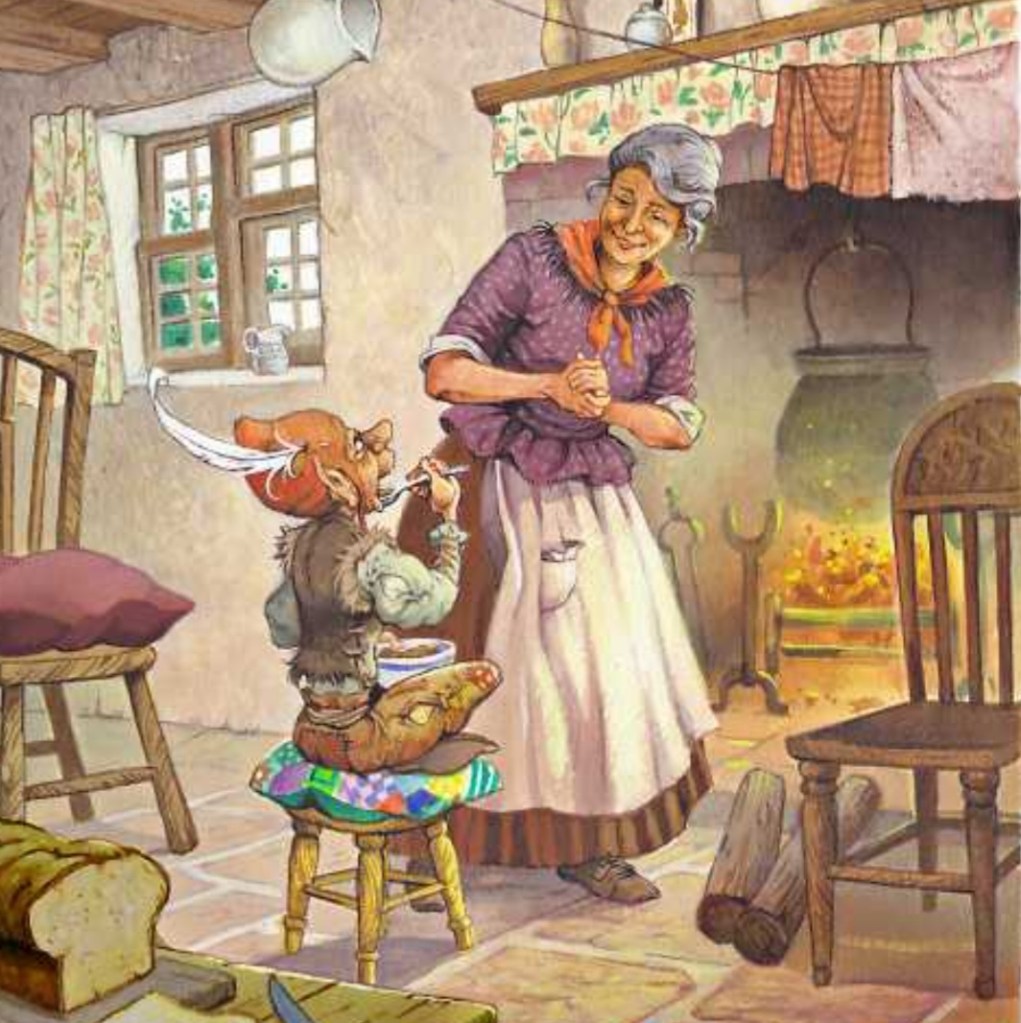
This again seems to be a well-established piece of lore that appears in every country within Britain, as well as in the Republic Of Ireland. The belief that to thank a spirit is to somehow do them a great dishonour and insult them. It is often how hapless humans often fall foul of faerie ways and end up tricked or harmed in some way. The same is held true of gifts; to gift an item to a faerie is said to be an extension of thanks and will not be appreciated at all by the fae. Apparently, faeries like to barely be acknowledged for their service at all and prefer to be virtually ignored when they give service to a human. This is another reason why it is said that one should never openly and verbally acknowledge the presence of a faerie helper within the home, as doing so can anger the being and either encourage it to leave or begin to practice mischief. Some people hypotheses that as well as being averse to gratitude, the faeries also dislike gloating, pride and praise, and to acknowledge openly the presence of the little people in the home could be seen as all three! So, should you ever decide to work with such creatures, remember just how capricious they really are.
Never Bless A House Spirit.
In extension to the above sectioned, it is widely held as bad luck to bless a spirit, especially if it uses the Christian Christ power to do so. As well as driving away all dark spirits, a blessing will also drive away more helpful spirits too…

Never Be A Drunk, Never Be A Gambler, And Never Strike The Innocent.
There are some accounts from Irish, Scottish and Devonshire folklore that suggest that house spirits and faeries alike do not like a dysfunctional home, and even if they are a helpful member of the household, they are not adverse to enacting tricks and revenge upon members (especially men) who are drunks, gamblers, or domestic abusers. In one Devonshire folktale, what had been a good farmer, had turned to drink and began taking his frustration out upon his family. On the first occasion of striking his wife, the man fell asleep drunk at the kitchen table and woke up to find himself fall flat on his face when he tried to stand because his shoelaces had been tied together. For this he blamed his wife and struck her again. However, when the farmer went out to saddle his horse to go into the village, his horse did not throw just one shoe, but all four! This cost him dearly to repair, and when he returned home, he stole his young sons silver christening band from his wrist, so that he might pawn it and go for a drink. When his wife and son protested, the farmer struck them both.
That evening, the farmer set off for the local pub, but never made it there. His horse returned home next morning, with the christening band braided into its main, and the farmer was never seen again. It was suspected that the farm’s elf had spirited the farmer away as punishment for his cruelty. But of course, this was only speculated in hushed tones, because you never acknowledge the fae out load.
Interestingly enough, this echoes an old tale that is shared by both Ireland and Scotland where a man abducts a Selkie to be his bride. However, she warns her new husband that if he is cruel to her but three times, it will set her free of her shackled marriage. Eventually of course, the husband is inadvertently cruel and the Selkie Bride is free to return to the sea.
I hope you have enjoyed this week’s blog, please don’t forget to remember that you are free to discuss this week’s topic in the private Facebook group, and perhaps even share some of the lore you’re familiar but has perhaps not been mentioned in this blog.
from the time, mists, and distance between us, blessings from me to you.
 Diary of a Folk Witch
2 responses to “Folklore And Spirits Of The Land Series: Making Your Home A Welcome Space For Friendly House Spirits.”
I love this thank you. Can I ask how you knew a spirit had taken residence in your little hobbit home?
LikeLike
Hi there Penny! Sure, house spirits will often offer you subtle signs of residency. This can range from a strong feeling or the sensing of their presence, to experiencing improved luck and opportunities, or even noticing things have been moved around the home. In my specific case of creating the little hobbit style house, I noticed an improved energetic atmosphere within the house and also less ‘paranormal’ activity. The house we lived in was an old Miners accommodation built in the 1880’s and would often display ghost-like activity. This activity began to die down after the invitation of a house spirit as they will, more often than not, see off any competing spirit! Which in this case, worked to our advantage. x
LikeLike